When the Ground Bleeds Black: Oil, Environmental Toxins, and Health.
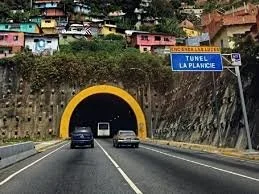
Growing up in Caracas in the 1980s was a bag full of surprises. I recently heard someone describe Caracas in those years as the Dubai of South America, and now, I can see it. The oil wealth was everywhere and nowhere at once. I remember my brother filling up his car for the equivalent of one dollar while the rest of the world looked at us like that was unthinkable. Multinational companies were pouring in to exploit Venezuela's petroleum reserves, people were getting richer, and the gap between rich and poor was quietly widening. But underneath all of it, literally underneath the streets we drove on every day, something really weird was happening.
There was an episode in the late 80's that became known as La Mancha Negra: the black stain. I remember Caracas having the darkest highways, a viscous blackness that seemed to pour up from the pavement itself. People said petroleum was seeping through the roadways' floors. The highways were slippery, disorienting, and dangerous. And we drove on them constantly. My parents drove on them constantly, day after day, year after year. Nobody connected it to health. Nobody asked what we were breathing, what was transferring through skin contact, what was quietly accumulating in our bodies over years of daily exposure.
It is only now, through my doctoral work in integrative health, that I find myself looking back and asking the questions no doctor ever asked us.
My mother was one of the people most consistently on those roads. Over those years, she developed what I now recognize as classic signs of chronic toxic burden: persistent fatigue, widespread pain, and symptoms that looked very much like fibromyalgia before anyone had given it that name. After she left Venezuela, she received an official fibromyalgia diagnosis. Decades later came a cancer diagnosis. I cannot prove causation. But I can no longer pretend the question is not worth asking: whether years of chronic low-level petroleum exposure, in a body whose immune system was already compromised, may have been the spark that set in motion longer-term disease processes.
The research of Sharma et al. (2024) documents that oil pollution generates a cascade of toxic compounds, including polycyclic aromatic hydrocarbons (PAHs), benzene, toluene, and heavy metals, all of which carry serious human health consequences ranging from respiratory damage and endocrine disruption to neurological impairment and increased cancer risk. Chronic low-level exposure, which is exactly the kind that comes from living and driving daily in a petroleum-saturated environment, is particularly insidious because it does not produce dramatic acute symptoms. It accumulates. It disrupts. It manifests years or decades later in conditions that medicine rarely traces back to their environmental origin.
Eklund et al. (2019), studying health consequences in Gulf of Mexico oil spill-affected populations, found significant associations between oil exposure and respiratory illness, neurological symptoms, immune dysfunction, and mental health conditions. Physiological mechanisms such as oxidative stress, systemic inflammation, and neurotoxicity from volatile organic compound inhalation apply directly to communities experiencing chronic ambient petroleum exposure. Ferreira et al. (2023) point out that biomonitoring of oil pollution effects remains critically underdeveloped globally, meaning populations like the one I grew up in have been living inside an unmonitored experiment with almost no documentation of the human cost.
Venezuela's situation has only worsened. Infrastructure collapse has led to daily ongoing oil spills devastating ecosystems and continuing to expose communities who have no resources to relocate or remediate (Solano, 2023). The people who are the most harmed are those with the least political voice and the least access to healthcare, who might never connect their symptoms to their environment.
To me, awareness matters so much. People living near petroleum infrastructure, contaminated highways, and industrial sites deserve to be the first protected. To minimize harm, we need to take these environmental histories seriously in clinical settings, support antioxidant-rich nutrition and detoxification pathways, advocate for community-level environmental testing, and demand that governments and corporations be held accountable for the infrastructure that shapes the air people breathe every single day.
My mother's chronic fatigue. Her fibromyalgia. Her cancer. The dark, slippery highways of my childhood. The questions were always there. We were never given the framework to ask them.
References
Eklund, R. L., Knapp, L. C., Sandifer, P. A., & Colwell, R. C. (2019). Oil spills and human health: Contributions of the Gulf of Mexico Research Initiative. GeoHealth, 3(12), 391–406. https://doi.org/10.1029/2019GH000217
Ferreira, N. M., Coutinho, R., & de Oliveira, L. S. (2023). Emerging studies on oil pollution biomonitoring: A systematic review. Marine Pollution Bulletin. https://doi.org/10.1016/j.marpolbul.2023.115081
Sharma, K., Shah, G., Singhal, K., & Soni, V. (2024). Comprehensive insights into the impact of oil pollution on the environment. Regional Studies in Marine Science. https://doi.org/10.1016/j.rsma.2024.103516
Solano, L. (2023, September 1). Oil spills in Venezuela destroy ecosystems. Diálogo Américas. https://dialogo-americas.com/articles/oil-spills-in-venezuela-destroy-ecosystems/